For a task like flying a plane on autopilot, it is obvious what sensors you will need. But when you enter the market of consumer devices, sales will depend more on the viewpoint and hopes of the consumer than on any objective technological measurement.
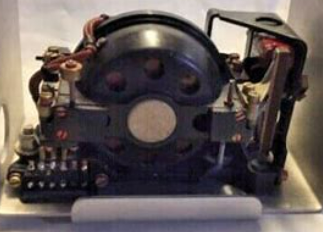
Half a century ago, when I was designing an autopilot, a rate gyro sensor consisted of a mass of copper spinning at 400 revolutions per second, 24000 rpm.
Now for all three axes, the same result can be achieved with a single chip, costing mere cents on the OEM market. As cheap sensors of all descriptions pour onto the market, the applications are boundless, going far beyond those elite applications.
Commercial success lies in thinking up new dreams, and then identifying the sensors that make them possible. But novelty is a commodity that is perishable. A new marvel can move from brilliant success to a commonplace gizmo in a matter of months, and can become obsolete in a very few years.
Is the Segway still making a lot of money? Is the developer of the quadrucopter still profiting from it, as it sweeps the film and television industry as a camera platform?
The problem with finding new dreams is that so many of them have already been fulfilled. You can dictate your assignment to your computer, or even to a wristwatch! The assignment can be beautifully typeset, printed on a sixty-dollar machine in a different room – without any connecting wires. But before you print it, your machine can read it back to you, in whichever seductive voice you choose. Your spelling and grammar are checked, and if you are stupid, you can even let AI software compose it for you.
You can let GPS guide you, pinpointing your position anywhere on the planet to within a metre. Not only will your camera capture brilliant images for you, it will also focus its lens to capture any part of the view that you choose with perfect sharpness. It can be smaller than a fingernail, built into a mobile phone that has a totally different purpose.
Will the mobile phone survive as long as the vacuum cleaner? It has become a container for so many fulfilled dreams, packed with maps and guidance, streaming television and music, and most of the trappings of its laptop larger cousin. It can even project its screen display to any flat-screen television that is handy.
So what unrequited dreams can you think of? An obvious one (at the time of writing) is the autonomous motor car. But like the second moon landing, it is a long time coming to fruition. Why?
People lose their lives in droves on the road, hardly making a local headline. But if any injury arises from an autonomous car, it is splashed across the world news. So testing for safety trumps any development, taking as many years as the testing of a new wonder medication.
For commercial success, your dream must not be associated with a risk for which you might take the blame. Look at the consequences of something like Cloudstrike .
Let us examine some examples in the next section.