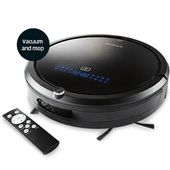
A while ago, my wife bought a ‘robot vacuum cleaner’, though I do not think that any vacuum is involved. When the zapper calls it out of hiding, it bumbles about the floor, sweeping small objects and dust into its receptacle.
It has bump sensors, causing it to back up and try another direction when it tangles with walls or the legs of chairs. It has a ‘Don’t fall over the edge’ sensor to avoid falling down steps. But with those alone, it just wanders around at random. It is quite good at finding its way back to the LED that marks its recharging kennel.
So give a thought to how you would redesign the perfect cleaner, keeping in mind the limitations of the user and the need to avoid expensive technology.
A helpful task might be mapping the room and its obstructions. For orientation, you might need a compass chip, but you do not need anything as serious as a Kinect. The cleaner can project a simple range-finder beam, and then rotate to scan everything around it.
Fans are quite cheap and some more expensive cleaners have them already.
But what should the size limit be of the objects that are gathered?
Is everything trash, or should you have a “This might be something you dropped and want to look at” tray.
Our present device is quite chatty, sometimes grumbling, sometimes proudly announcing what it is doing. What would yours do?
Write up your thoughts as part of the assessment that you will submit for this module. I promise not to steal your ideas.
In your reflection, include your user instructions – but keep them to a dozen lines or so.